
All About Dairy
To drink milk, or not to drink milk, is a question that isn’t easily answered. There are a lot of conflicting theories about dairy products, depending on where you’re looking for your information.

- Dairy producers will tell you that milk is good for you. They’ll also tell you about all the good things they’ve done to it to make it better – like pasteurising it (so you don’t get food poisoning), homogenising it (so it’s creamy all the way through), taking the fat out (so it’s not creamy at all, to save you from getting fat) and adding extra calcium (for prevention of osteoporosis). They may not tell you that by pasteurising it, they have destroyed the enzyme that enables you to absorb calcium, so all that calcium is useless.
- Anti-milk sites will tell you milk is food for baby cows, but is toxic poison for people. They may not talk about areas of poverty where having a cow and being able to rely on fresh, clean milk means the difference between life and death.
- Others will tell you that raw or cultured milk is good, but pasteurised or homogenised is bad. They may not always be aware that some people are so ill suited to drinking milk, that even the best quality raw milk must be avoided.
As you can see, the truth is a little more complicated. Let’s look at all aspects of the question, so you can make the best choice for you. There are two main things you need to take into account – the quality of the milk, and your individual tolerance to it.
May 2006: I recently did an interview on Raglan Community Radio, discussing some aspects of my Dairy article. It can be downloaded here. (Right click to download). It’s a 22MB file, so may take a while to download.
The sections below cover:
- What are the characteristics of good quality milk?
- Summary of what to look for
- Is milk a suitable food for humans?
- Different levels of dairy tolerance
- What to do if you can’t have dairy at all
- Summary of recommendations
What are the characteristics of good quality milk?

There are various aspects to take into account:
- Type of feed
- Organic vs. non-organic
- A1 vs A2 milk
- Type of cows
- Fat content
- Homogenised or not
- Raw vs. pasteurised
- Freshness
Type of feed
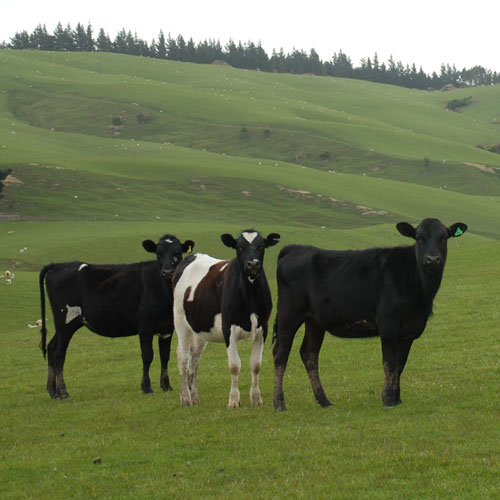
The quality of the milk depends on the quality of the feed. It is vital for cows to be raised on pasture, eating grass or hay, with room to roam about, and somewhere clean to rest and sleep.
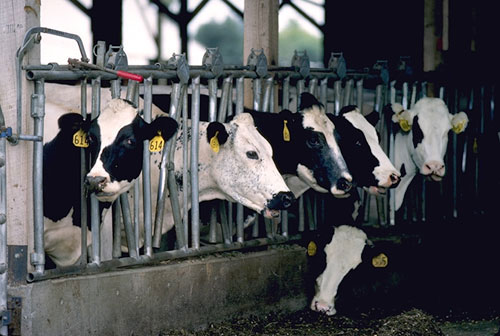
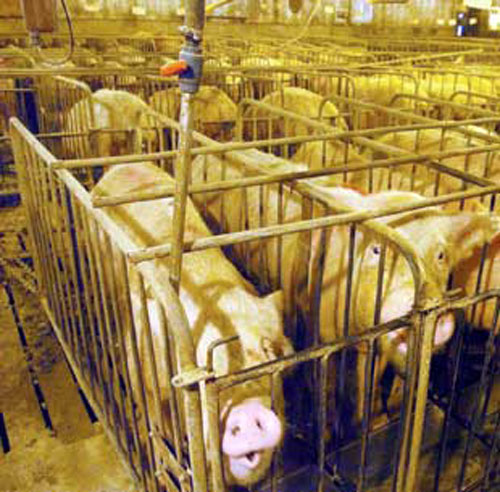
NZ readers are probably wondering why that needs to be spelt out, as that is how all cows are raised in New Zealand. But that’s not the case in all countries. In the US, for example, many cows are kept in confinement, unable to find a clean place to stand or lie down, never see the sky or breathe fresh air, and eat grains (or worse, according to Fast Food Nation, by Eric Schlosser!).

Cows are designed to eat grass and are not meant to be fed on grain. Products from cows fed grass contain much higher levels of CLA (conjugated linoleic acid – a fat with cancer fighting properties), Omega-3 fats, beta-carotene, vitamin A, and vitamin E than those those fed grains. For more details, see www.eatwild.com
As well as feeding cows inappropriately, factory farming methods may include:
- confining the animals in spaces too small for them,
- feeding of growth hormones such as rBGH (made by Monsanto), which causes mastitis, a painful udder infection,
- and routine feeding of antibiotics to prevent illness.
The Meatrix video shows this more graphically than I can, so check it out here. (But remember to come back here for the rest of the article. Factory farming is the just the beginning of the milk story.)

For decades, vegetarians and vegans have been shunning meat and/or dairy products for animal cruelty reasons. But to do that may be sacrificing your health unnecessarily. Now also online is The Meatrix II which begins to highlight some of the alternatives, such as supporting small, local farms, eating free range eggs and pasture raised dairy. [In NZ, cows and sheep are generally pasture raised, but pigs and chickens are often confined. So it’s important for many reasons to buy free range eggs and organic, free range chicken and pork.]
Organic vs. non organic
Pesticides on grass that is eaten by cows make their way into the milk supply. A healthy person’s liver can neutralise and eliminate such toxins. But we’re exposed to lots of toxins in our modern world. At some point your liver will get overloaded and be unable to do it’s job properly. So it makes sense to eat organic when you can (without stressing about it if you can’t). This applies to all foods, not just dairy.

Pesticides are usually herbicides (about 65% in NZ), fungicides (20%) or insecticides (10%). In NZ, some of the residues that may be in non-organic milk include DDT and organophosphates.

DDT has been used in NZ since the 1950s. It was banned in the US in 1972, but not until 1987 in Australia and 1989 in New Zealand. It was used in livestock farming here till the end of the 70’s and even longer in orchards and home gardens. DDT remains in the soil for long periods of time, and residues are still being found in milk and other products today, with Canterbury being particularly affected. There is a level of DDT that is considered “safe” and milk can be sold containing up to that level. Consider that commercial milk comes from a variety of sources, and while some are low in DDT, some could be quite high. When the milk is all mixed together, the average level is below the cut-off point. But what would be the ethics of selling milk known to be high in DDT, by combining it with safer milk, if such a thing is happening?

In 2000, the Safe Food campaign found that NZ children were exposed to five times the pesticide residues that US children were. This is mostly from organophosphates and fungicides. Although the Ministry of Health felt that this was not a problem, the Safe Food campaign felt it was a major health issue and so do I!
A1 vs A2 milk
Another aspect of the milk is whether the beta-casein component of the protein is A1 type or A2 type. Although it’s not conclusive at this stage, research done at Lincoln University, in New Zealand, has shown correlations between A1 milk and diseases such as heart disease and Type 1 diabetes. These diseases have no such correlations with A2 milk.

Originally, all milk was A2. About 5000 years ago there was a mutation in Europe and the A1 genes spread through cow herds. These days:
- Goats and sheep milk is equivalent to A2 milk, as is human milk.
- Heirloom breeds tend to have more A2, newer breeds – A1.
- Different countries have a different mix between the two. For example, Iceland is mainly A2, where Finland is more A1. The level of heart disease is higher in Finland.
- Masai and other African cattle only produce A2 milk, which is significant when you consider that the Masai are very healthy on a diet of mainly meat, blood and fermented milk, with little heart disease.
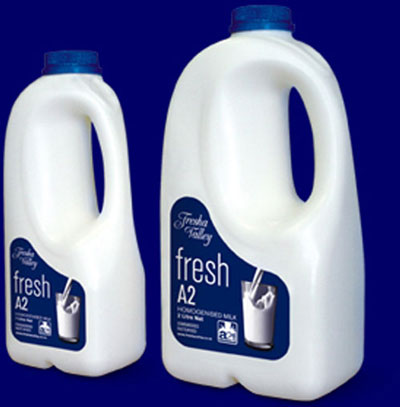
There is some A2 milk and cream available in New Zealand, try your organic store.
Type of cows
Holstein or Friesian cows are commonly used for producing dairy as they have a higher milk yield. But more isn’t necessarily better. To achieve this, they are bred to have higher levels of growth hormone, which is undesirable for feeding to children, unless they have growth deficiency diseases.
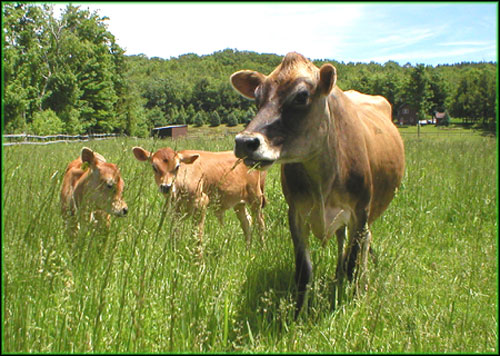
I prefer milk from Jersey or Guernsey cows (such as the one pictured), which has these characteristics:
- It is usually predominantly A2 milk
- Lower production of milk per cow, which means the available vitamins are more concentrated in the milk
- A higher quantity of cream, so rich in the fat soluble factors
- Generally seems to have a superior taste
Which leads to your next question – but surely more cream and thus more saturated fat is bad for me?
The fat content
- Many people are now purchasing low fat dairy products under the mistaken belief that saturated fats, especially dairy fats, are bad for you. In fact, traditional societies ate large amounts of saturated fat and enjoyed excellent health. When they started eating “western” food, their health declined dramatically.
- Animal fat is a good source of valuable vitamins such as A & D, which are needed to assimilate calcium and protein. Many people believe that betacarotene, found in plants, is the same as Vitamin A. Beta-carotene can be converted to Vitamin A by most people, but some people are unable to make the conversion or make it poorly, especially infants & children (those who need it most) and people with hypothyroid or diabetes. Fat is also needed to make the conversion, so conversion can also be hindered by a low fat diet.
- Fat, and vitamin A, are needed for the proper utilisation of protein. Problems with too much protein are usually because lean protein is being eaten, without the needed fat. Tribes studied by Weston Price, when on their native diets, knew to avoid lean meat, as it made them ill, and would eventually kill them.
- It is widely and inaccurately repeated that eating fat makes you obese. Certainly some fats are very unhealthy, but saturated fats and cholesterol are needed by the body for building materials. It is mainly excess carbohydrates (eg bread, pasta, sugar) that get stored as fat.
- The main increase in heart disease has been since we started adopting low fat diets. Many studies have shown that those people who eat most saturated fats have the least heart disease.
- We are just starting to learn about the role of certain fatty acids (such as CLA – conjugated linoleic acid) and how they are vital to our well being. For example, CLA isomer 9-11 (the isomer found in milk) is being linked to and credited for its ability to fight and prevent cancer cell growth. Our bodies cannot make these fatty acids. CLA is only produced in ruminant animals and is only available in any significant quantity in 100% grass fed ruminates.
- In Nutrition & Physical Degeneration, Weston Price talks about the health benefits of butter. In his studies, he found a substance he called Activator X. At first he thought it was Vitamin D, but found it had some different properties. It is especially important in mineral utilisation, including building tooth strength. The best source of it is butter from cows that are consuming the fast growing spring grass.
Homogenisation
Homogenisation is a process that breaks down butterfat globules so they don’t rise to the top of the milk. But by doing so the structure of the fat is changed.
There is a big increase in surface area of the fat globules. The original fat globule membrane is lost and a new one is formed that incorporates a much greater portion of casein and whey proteins. Lipid scientist Mary Enig thinks this may be one of the reasons modern processed milk is a common allergen.
Other researchers have hypothesised that these changes may account for the increases in heart disease, but that hasn’t been proven.
At this stage, we just don’t know how damaging the homogenization process is, and can’t be sure it’s benign. So whether you choose raw or pasteurized milk, avoiding homogenised milk is probably prudent.
Raw or Pasteurised?
We’re told that milk has to be pasteurised to kill pathogens and prevent disease.
- The practice of heating milk to kill germs was instituted in the 1920s to combat diseases caused by poor animal nutrition and dirty production methods. But times have changed and modern production methods make pasteurisation unnecessary for public protection. Pasteurising kills harmful bacteria, but also destroys enzymes (including the one needed for utilising calcium), diminishes vitamin content, denatures fragile milk proteins, destroys vitamin B12, and vitamin B6, kills beneficial bacteria and promotes pathogens. It is also associated with allergies, diabetes, increased tooth decay, colic in infants, growth problems in children, osteoporosis, arthritis, heart disease and cancer.
- You may have heard stories of people getting sick from raw milk, due to pathogens such as campylobacter, salmonella, e.coli and listeria. It can happen, but is very rare in good quality, organic, grass fed, raw milk. That is due to the natural disease-fighting enzymes present in raw milk from healthy animals, some of which specifically target salmonella and listeria, for example. In California, one organic farm who produce raw, grass fed milk, deliberately contaminated a batch of their milk (for testing purposes only!) with millions of pathogens. Within a few days, they had nearly all been neutralised. If pasteurised milk is exposed to pathogens, on the other hand, it is far more dangerous, as there is nothing to combat them. Nearly all cases of food poisoning are from eating foods other than raw milk (generally foods that most people eat with no concern), or from contact with non-food contaminants. Often an illness is initially attributed to raw milk, but is then traced to something else.
- There is a small danger that people with very compromised immune systems may occasionally contract a disease. But this is a much smaller risk than that of developing a chronic illness due to the consumption of pasteurized milk. And to offset it further, raw milk has potential to build up the immune system of such people.
- A byproduct of killing bacteria by pasteurisation is the formation of histamines. This may be one reason that so many people have asthma or allergies from drinking milk. Raw milk doesn’t contain histamines, and many asthmatics find that while drinking it regularly, they have no or few asthma attacks.
- Historically, raw milk was successfully used as a treatment for many illnesses, including chronic diseases such as asthma.
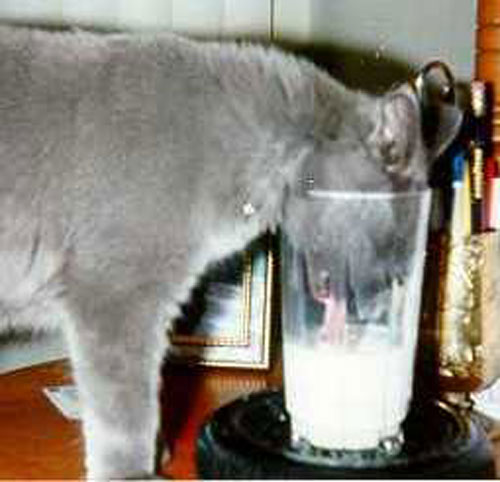
- Calves fed pasteurised milk do poorly and many die before maturity. Similar effects have been observed with other animals. Early last century, a scientist called Pottenger conducted a series of feeding experiments on cats, over a 7 year period. Those he fed on raw meat and raw milk thrived. Those fed cooked meat or pasteurised milk quickly developed many diseases, by the 2nd generation had stunted growth and high kitten mortality rates, and by the 3rd were unable to reproduce.
Possible health benefits of switching from pasteurised to raw milk include:
Less:
- asthma
- allergy problems
- infections
- heart failure
- high blood pressure
- diabetes
- obesity
- and joint stiffness.
Better:
- children’s growth
- calcium absorption
- and immunity.
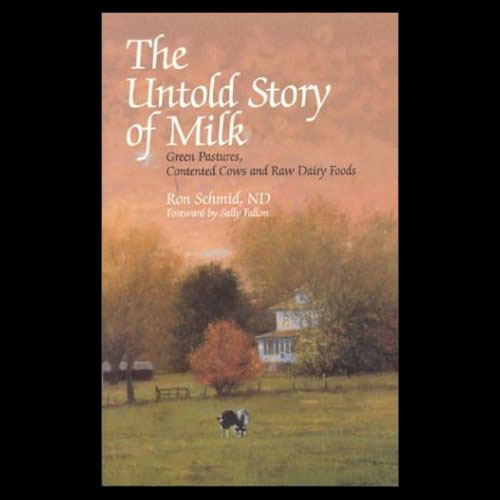
If you want to read more about raw milk, go to: www.realmilk.com or get hold of The Untold Story of Milk by Ron Schmid.
Freshness
One reason that the big milk producers want to pasteurise the milk is that it will keep longer. With raw milk, after a few days it will sour naturally. It is still nutritious, but turns to a different form. So with raw milk, you can always tell how fresh it is.
Pasteurised milk may already be several days old by the time it reaches the supermarket. There is no way for you to tell how fresh it is. You can tell when it’s gone off though – it turns putrid and undrinkable!
Summary of what to look for
So if you’re just looking at the quality of the milk, the best milk to buy is generally:
- Grass fed
- Non-homogenised
- Raw
- Organic
- A2 milk, or from Jersey cows, goats or sheep
If you can’t get all of these, make sure it is at least pasture raised, non-homogenised and full cream; and organic, if possible. In NZ, last time I checked, there were three brands available commercially that had a non-homogenised whole milk in their range – MeadowFresh, Naturalea Organic and Ecofarm Organic.
How to find raw milk
It’s not always easy to find raw milk, especially of a quality you’d want to drink. In the US, each state has it’s own laws – raw milk is freely available in California and Organic Pastures milk is of excellent quality, but in some States, it’s completely banned.

In NZ, it is theoretically legal to sell up to 5 litres of raw milk at a time to each customer at the farm. But in practice, the farmer may be required to comply with a number of other bureaucratic measures first. Up to a point, it’s good that there is a requirement for some hygiene and safety measures. But to me, it’s bureaucracy gone mad, when farmers comply with one standard (at substantial cost), only to have the rules changed on them and be threatened with prosecution if they don’t then comply with the next new, replacement regulation. This is making it difficult for farmers to be able to afford to supply us with good quality raw milk.
Many people have come to the conclusion that large dairy processors are influencing government regulations in order to protect their monopoly. In NZ for example, a giant processor who would rather avoid paying farmers a fair price for their milk, could use their substantial power to attempt to ensure that farmers stay entrapped in the monopoly, earning in the region of 25c a litre for milk that retails for nearly $2. The over zealous enforcement of food regulations by government bureaucracies protects the interests of this huge export earning company, while denying the NZ public the freedom to choose their own food, and NZ farmers the right to choose how they sell their produce. Similar restrictive patterns also apply to farmers producing many other foods.
If you find a farmer who is able to supply you with raw milk, you may want to check out the farm yourself and make sure you’re happy with their procedures. Look for:
- Plenty of clean pasture
- Clean, healthy looking cows – not too fat or thin
- A farmer who is happy to answer questions about his testing routine, and who would be happy for you to run your own tests
- A farmer who is happy for you to talk to his other customers
- And of course, great tasting milk!

There is a way to restore some quality to milk that isn’t as good as you would like, and that’s by culturing (fermenting). Culturing creates beneficial bacteria and yeasts which help maintain digestive health. So even if you feel great on milk, consider trying some ferments for additional health benefits. Traditionally, most cultures who ate dairy products ate them in fermented form, as one of those below or as cheese.
- The cultured dairy you’re probably most familiar with is yoghurt (or yogurt). But I’m not talking about the type of yoghurt that has sugar, flavourings and skim milk powder added. I’m talking about natural yoghurt, preferably full fat, with live cultures, and no additives, made from the milk of grass fed cows. In NZ, a couple of examples are Bio Farm Organic Acidophilus and Cyclops European style (with the green lid). The beneficial bacteria in yoghurt typically include Lactobacillus acidophilus and bifidus. You have maybe heard that yoghurt with these live bacteria, or a supplement containing them, is good for replenishing the good bacteria in your gut after taking antibiotics.
- You can also make your own yoghurt, using a good quality bought yoghurt as a starter, or part of a previous batch.
- Another very popular type of fermented milk is kefir. It is generally thinner in consistency than yoghurt, a bit tangier, and yeastier in flavour. It is easier than yoghurt to make at home, but you do need starter “grains”. The good news is that once you have your kefir grains, they grow with each batch you make. So after a while you have enough to share with friends. This means you can usually get hold of some free, or just for the cost of postage. If you’re in NZ, email me for a contact near you. If you’re overseas, check out the Rejoice in Life website. Click here to download instructions for making your own kefir. Kefir is believed to come from the Northern Caucasus Mountains, and has been used in what was formerly the USSR, and surrounding areas, for 3 centuries. A great website with loads of information on kefir is Dom’s “kefir in-site”. His site has a full list of the beneficial compounds typically found in kefir – Lactobacillus acidophilus plus many others. (You may also see mail order kefir kits for making kefir from a powdered starter. The product you make from this starter is just as beneficial, but doesn’t reproduce. So if you can get them, grains are a better bet in the long term.)
- Also available is Caspian Sea yoghurt or viili. I’d heard about it before, but only just got hold of some myself. It’s even easier to make at home – you just mix part of the last batch with your milk (about 10% starter), mix well, cover with something that will let in the air and leave on the bench for 12-24 hours. It is thicker and “gloopier” than either yoghurt or kefir with a mild flavour. The beneficial bacteria are Lactococcus lactis subsp. cremoris FC and Acetobacter orientaris FA, working together. Viili originated in the Caspian Sea (so in the same area as kefir), and was taken to Japan by a scientist working there who observed how good it was for digestive health. It has been used widely in Japan since then. If you’re in NZ, email me for a contact near you.

What if I want to make goats milk yoghurt, kefir or viili?
To make an acidophilus type yoghurt: Buy an organic goat yoghurt and use that as a starter to make their own goat milk yoghurt, using the same traditional recipe as you would for cows milk.
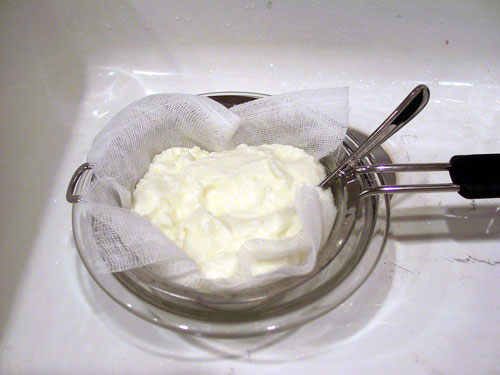
To make caspian sea yoghurt (viili): First you’ll need to get hold of a starter. Chances are you won’t be able to get goats milk, you will have to adapt a cows milk starter. The first batch you make will be 10% cows milk, 90% goats milk. Use this as your second starter, and (unless there is someone else in the house who tolerates dairy) throw the rest away. Your second batch will be 1% cow, 99% goat. By the third batch it will be 99.9% goat and so on, until you only have minute amounts of cows milk left. So when you can start using it will depend on what your level of sensitivity to cows milk is. If you’re sensitive to homeopathic quantities, you may never be able to have it.
To make kefir: If you can’t get “grains” that have already been adapted to goat, get some that have been used for cows milk and rinse them really well. Then use them in the goats milk. It may not be possible to remove every trace of milk from the grains, so you might want to throw the first couple of batches away. Again, if you’re sensitive to homeopathic quantities, you may never be able to have it. In that case, you could get a powdered starter from Wilderness Family Naturals.
Is milk a suitable food for humans?
When thinking about whether a food might be suitable for humans, a good rule of thumb is often to ask “Would (or could) my ancestors have eaten this?”
Our ancestors originally ate what they could hunt or gather – wild game, berries and fruit, greens and vegetables, nuts and seeds. Later when they were able to domesticate animals, dairy products and eggs were added. Grains and legumes weren’t commonly eaten till humans settled in one place, instead of being nomadic, and were able to regularly grow crops.
Goats and sheep were domesticated around 9000 BC, and cows around 7000 BC. So not a huge amount of time, in evolutionary terms. Some of us have adapted to thrive on dairy, and some don’t do well even on the best milk around.
We’ve already talked about the drawbacks of bad quality milk, now let’s look at possible drawbacks of good quality milk. The main problem is that nature designed milk as a food for baby cows:
- Calves have very different digestive systems to either baby or adult humans.
- The milk protein is different from the protein in human milk, as is the type of fat. Goat and sheep milk are much closer to human milk in composition than cows milk.
- And remember that no other species continues to drink milk beyond infancy.
There are two problems caused by this.
- One is that we don’t have the right digestive system to digest cows milk. So many people are unable to properly digest dairy products, and undigested food leads to a variety of health issues. This is one of the reasons for so many dairy allergies and intolerances. (Another, of course, is the appalling quality of most commercial milk, as discussed earlier.)
- The other is that even if we are able to digest it, it is a high calorie food designed for fattening up growing juveniles. So in practical terms, often people may feel really good on good quality raw milk, but may find that that they put on weight. So the milk is nourishing them – too well!
But we are evolving organisms, and SOME people, through need or longer hereditary exposure have learned to be nourished by milk. There is too much evidence of people regaining their health after drinking good quality raw milk to discount the possibility.
People who do well on milk could include:
- Some people have ancestors who relied on milk for their protein and fat source, such as those from India or the Swiss Alps. These people are likely to actually need milk products.
- Some people from the Middle East would have ancestors who drank goat or sheep milk, and would do well on goat milk, but maybe not so well on cow’s milk.
- Some people can quite happily drink any kind of milk with no apparent ill effects, but don’t really need it.
Others who may not necessarily be as well suited genetically, but who may need the nutrients due to lifestyle choice or circumstance, could be those who are unable to get adequate protein, animal fat and fat soluble vitamins from their diets:
- Vegetarians, especially those who don’t eat fish. As well as protein and fat soluble vitamins, animal products are the only source of Vitamin B12.
- People with limited financial resources may not be able to afford meat regularly. Dairy products and eggs will help supply the necessary nutrients.
- Adelle Davis, in her classic book from the 60’s Let’s have Healthy Children, recommends raw or cultured, full cream milk for all children. This would especially apply to those infants who are unable to be breastfed, or children who are undernourished due to poverty. For those who can’t tolerate cows milk, she recommends yoghurt or goat milk.
- In many third world countries, dairy products are vital for survival.
An anecdote – When the US was first settled, it was a very hard life, and many people had to return to England, as they couldn’t support themselves on the land. It wasn’t until they were able to keep cows and drink the milk, that enough people were able to stay and remain in health.
If you fall into one of these categories, you have lots of variety. Once you choose the best quality milk you can find, and get it home, there different ways you can use it:
- As is, in smoothies or with cereal
- Made into yoghurt or kefir, so that it has less lactose and more beneficial acids
- Skim off the cream and either use it fresh, sour it, or make it into crème fraiche or butter
- Make it into cheeses
- Make homemade ice cream, from cream, egg yolks, and natural sweeteners and flavours
- If you’re lucky, you’ll be able to buy not only raw, organic milk, but ready made raw butter, cream, and cheese.
The ways you use your dairy produce will depend on your taste, lifestyle and individual tolerances.
There are probably not many people who actually NEED dairy, but as with grains, most of us have come to like and want it. It can be a very convenient food, but isn’t always necessary. So we need to weigh up our habits and wants against our body’s need, consider the pros and cons and make our own decisions. Only you can figure out whether dairy products are beneficial, neutral or harmful for you, and make your choices accordingly. After all, all manner of rubbish that we never evolved to eat is sold under the guise of food in every supermarket.
Individual levels of tolerance
If you don’t do well on milk, let’s look at the possible reasons. The first to consider is that your problem is with processed milk. This could be for several of the reasons discussed above under pasteurisation – like not enough enzymes, or production of histamines.
So check that out first. Get hold of some good quality, raw, grass fed milk and try it out. For many people, that is the only change you need to make. Once the issue of quality has been addressed, there is no longer a problem.
Or even better, get your good quality milk and culture it, and see how that is for you.
But if that doesn’t help, and you really do have a problem, there are several possible reasons, which can be broadly broken down into 3 categories:
- An allergy to some component of dairy, eg. :
- casein
- whey
- phenolics (chemical compounds)
- An inability to digest some part of the dairy, eg:
- Lactose intolerance
- Inability to digest complex carbohydrates
- Inability to digest dairy fats
- Just being generally unsuited to milk metabolically
How can I tell what kind of intolerance I have?
There is no hard and fast rule, you may have to do some experimenting, but here are some indications.
If your problem is digestive – it is probably:
- lactose intolerance, or
- an inability to digest complex carbs, or
- an inability to digest dairy fat, or fat in general
If your problem is respiratory – it is most likely to be:
- a dairy allergy, most commonly to casein
If you can drink low fat milk with no problems, but full fat milk makes you clog up, it is likely to be:
- a problem digesting or assimilating dairy fat, or
- an allergy specifically to the fat component of dairy
If you feel great when you include good quality raw dairy in your diet, but seem to put on weight, it could be:
- a dairy allergy, most commonly to casein
- or just that dairy is too high in calories for your needs
If you don’t have any particular symptoms, but just don’t feel that great on it, it is probably:
- causing an adverse shift in your metabolic balance ie. you’re just not well adapted to it metabolically, and other foods suit you better
Dairy allergies
We’re talking here about true allergies, where there is an Ig reaction of some kind. (See the gluten intolerance page for more details about the differences).
The most common is to casein, which is in all forms of dairy, and is unaffected by fermenting. Some people are affected specifically by the A1 casein, and can tolerate A2. But otherwise, your dairy choices are restricted to possibly butter or ghee.
If it’s the whey you’re reactive to, you may be able to tolerate cheese.
Some people react to phenolics (chemical compounds in dairy) . As far as I’ve been able to find out, phenolics are not a problem if the milk is raw.
Lactose intolerance
This is not actually an allergy. Instead it is an inability to produce the enzyme lactase, which is needed to digest lactose. People who can’t digest lactose can sometimes drink:
- Goat or sheep milk, which have less lactose
- Lactose free milk, although this has been processed so has other drawbacks
- Fermented milk, which has less lactose
Or you can supplement with a capsule of lactase enzyme each time you eat dairy products.
Inability to digest complex carbohydrates
Breaking the Vicious Cycle, a book by Elaine Gottschall, explains why some people are unable to digest complex carbohydrates, and outlines a diet (the Specific Carbohydrate Diet) that excludes the offending carbs. People with a wide range of complaints including colitis, Crohn’s disease and autism have had success with this diet.
If you’re gluten and dairy intolerant, and still having problems once those foods are excluded, it may be worth trying the SCD for a while.
Inability to digest fats
There are several possible reasons for being unable to digest fats:
- An inability to digest fats can, ironically, arise from a lack of fat in your diet. Your body loses the need, and the ability, to digest them. A digestive enzyme supplement can be useful temporarily, when increasing the fat in your diet, to help make the adjustment.
- If you’ve had your gall bladder removed, your body has nowhere to store bile between the time it’s produced in the liver, and the time you need it. You may need to permanently take a bile supplement with meals.
- Your system may just have a need for less fat than some other people. See the comments on metabolic typing below.
Not suited metabolically
We all have different metabolic needs. The various types of metabolic typing have different recommendations on dairy. For example:
- Wolcott recommends full fat dairy for Protein types, and low fat for Carbo types
- McFerran doesn’t recommend dairy for anyone
- D’adamo only recommends dairy for B blood types, and suggests other types strictly limit it
If you just don’t feel as good as you could, on dairy, and can’t track down any specific intolerance, keep it to a minimum. But still use butter or ghee, as they are easily digested fats for most people.
What to do if you can’t have dairy at all
Back in Hunter Gatherer times, our ancestors didn’t eat dairy products or grains. But we’ve got used to them being such a huge part of our modern diet that we don’t know what to do without them. On other pages, we’ve talked about gluten intolerance and what to do about it. For some people, it’s easier to give up wheat & gluten, than it is to give up dairy.
“The Garden of Eating” by Rachel Albert-Matesz and Don Matesz is an excellent cookbook full of delicious recipes for a Hunter Gatherer diet. It’s high in fruits and vegetables, nuts and seeds, meat and fish, and without grains or dairy, and is a useful resource.
For those of you concerned about getting enough calcium, check out the calcium page to see other foods that you can get it from.
In the meantime, here’s some ideas for substitutions.
Milk
- Some people who can’t take cow’s milk, can drink goat or sheep milk. Or you may find you can tolerate A2 milk.
- Otherwise, I consider the best substitute to be coconut milk. It tastes good, the fat is another good saturated fat, with easy to assimilate medium chain fatty acids, and it can replace milk quite easily in many (though not all) recipes – it makes delicious custard for example. The most nutritious is that made at home from fresh coconuts. But this is time consuming, so many people use bought coconut cream or milk. Many brands have gums added to stop the cream from separating, but often people with other food sensitivities also react to gums. So look for a brand that has no additives and hasn’t been homogenised. Here in NZ, I use Palm Island brand. If you’re in the US, you might be able to find it in glass bottles, which is generally better than tinned.
- Nut milks can work for some people. Homemade is best, as shop bought ones usually have added sugar. To make your own:
- Choose from almonds, walnuts, macadamias, pecans, brazils (you can also use cashews, but they can only be soaked for 4 hours maximum)
- If the nuts are large, like brazils, chop roughly
- Soak 1 cup nuts in 4 cups water overnight
- Blend thoroughly
- Strain
- Use as is, or flavour with vanilla essence, or add a little natural sweetener
- Some people like rice milk, but for most people it is way too high in sugars, carbs and additives
- The most well known substitute, which many people believe to be the healthiest, is soy milk. But I would advise you to avoid it as soy foods are not the health benefit they have been advertised as being – read more about that here.
Cream / Sour cream
- Undiluted coconut cream is really the only substitute I can recommend for cream needed to complement a sweet dish. For a pouring cream, use as is.
- For a whipping cream, open your tin of coconut cream, put into the fridge in a glass container. When it is thoroughly chilled and separated, scrape the thick cream off the top and beat in a food processor. It won’t come out quite as thick as whipped cream, but should hold together. (But as with any new recipe, practice this on the family, before trying it for guests!)
- For a savoury dip, think Middle Eastern dips like hummus or Baba ganoush. Or try well mashed or beaten avocado as a base.
- Beat together some tahini with an equal quantity of warm water that has had a pinch of sea salt dissolved in it. Beat till fluffy, and refrigerate for about 4 hours till thick. Use as is as a sour cream substitute on baked potatoes for example, or add extra flavourings such as lemon juice or garlic and make a dip or pouring sauce. (You can make nut butters fluffier like this too).
Butter
- Butter is the most necessary of the dairy products, as it is in the fat that all the most beneficial nutrients are found. Some people who have trouble with other dairy products can eat butter with no ill effects. So try that first. You may even like to try making your own, from good quality raw cream. Here’s how to make butter.
- If that’s no go, next is to try ghee, also called clarified butter. Homemade is best as you can control the quality yourself, and it’s fairly easy to make. Here’s how to make ghee. In some places, you can also buy butter oil, which is similar. All of the critical nutrients are concentrated in the butter oil or ghee. Butter oil is more concentrated, and hasn’t been heated, so also contains Wulzen factor, also known as anti-stiffness factor.
- If even ghee causes a reaction, you still have some options, depending on what need you want to fulfill.
- To spread on bread, so your toast or sandwich isn’t dry and unappetising, try extra virgin olive oil, nut butters, avocado, hummus or pesto
- For baking, try coconut oil or palm oil for sweet and palm oil or olive oil for savoury.
- On the Yahoo GFCFNN (gluten free, casein free, native nutrition) board, many people experienced some new health problems, often hormonal, when they cut out dairy. Although there isn’t a complete substitute for the health benefits of butter, bacon fat or lard seemed to be best for alleviating those deficiencies.
Ice cream
- If you feel good on the coconut milk, try coconut ice cream. It’s a bit icier than dairy ice cream, but still delicious. Click on this link and scroll down for an ice cream recipe from Bruce Fife’s “Coconut Lovers Cookbook” and some other coconut recipes.
- If you don’t need to be on a carb controlled diet, fruit sorbets can hit the spot on a hot day.
- Or for a quick sorbet, zizz together in the food processor: a chopped frozen banana, some coconut oil, some vanilla essence, a pinch of sea salt, and some natural sweetener such as honey or maple syrup. Eat straight away. You can also add extras such as cocoa, carob or pecans for different flavours.
Cheese
This is probably the trickiest and nothing really works. The best that the amazing people on the GFCFNN board can come up with is:
- Corn polenta, maybe with chopped up sausage and herbs, or
- Lardo – which is made by burying lard or other animal fat in salt
Whatever you do, though, avoid soy cheese, for all the usual reasons soy is undesirable.

If you’re in Wellington, NZ, and think you may have allergies to gluten, casein or other foods, contact me for a free 15 minute consultation to go through your options.
Summary of recommendations
Do your own analysis of the benefits and drawbacks of dairy products, as only you know your own level of tolerance and need. But as a rough rule of thumb, here’s what I’d suggest:
- Avoid processed milk if you possibly can
- If you’re currently using it and feel fine:
- Consider trying out raw milk if you can get it
- Otherwise, make your own kefir, or stick to fermented dairy like cheese or yoghurt
- If you’re currently using it and think it may be causing problems:
- Stop dairy completely for a while and see how you feel
- If there’s an improvement, see if you can have raw dairy, or fermented dairy without the problems recurring
- If you’re not using dairy as you react badly to processed dairy:
- You may want to try out raw dairy to see if you can tolerate that
- If you’re not able to tolerate any dairy at all, look for other ways to get the nutrients recommended by Weston Price.

Jan 2017: I am posting this content to Steemit in a series of 6 articles, that will be slightly updated. Check them out on my blog at https://steemit.com/@kiwideb