APRICOT KERNELS
 FROT
FROT
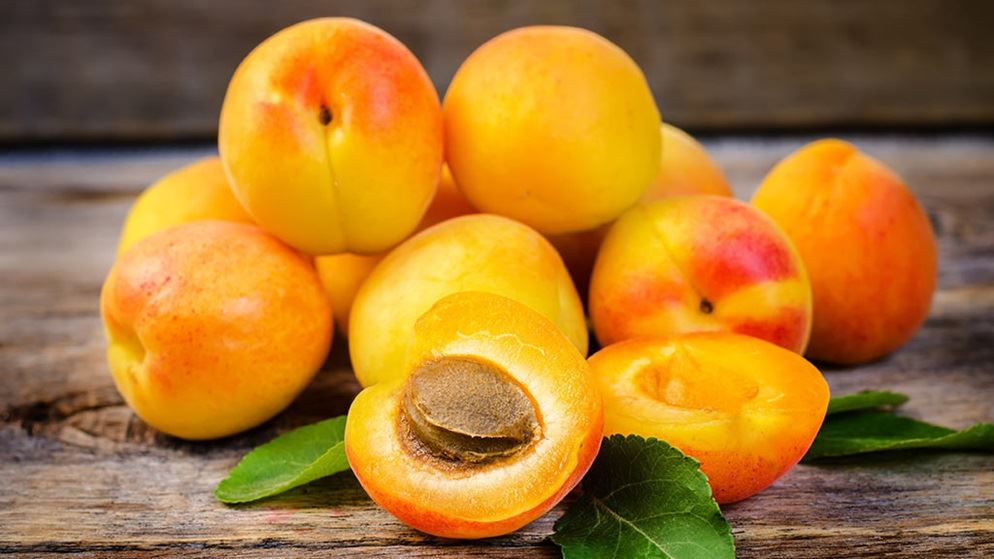
Treating Cancer with Apricot Kernels
There is a great deal of controversy over the treatment of cancer using supplements containing Vitamin B17 (laetrile). Most commonly this is taken in the form of apricot kernels. Doctors, particularly in the US, say that apricot kernels and other foods containing B17 are full of cyanide, and will prove fatal if eaten. Meanwhile, there is a 40 year history of the successful treatment of cancer using laetrile. These B17 containing foods do contain substances called Cyanogenic Glycosides, but how dangerous are they?
Looking through the literally hundreds of personal stories posted on the internet of people taking B17 and recovering from cancer, it is a common thread that they all say their doctor told them apricot kernels were toxic. And then couldn’t believe it when they got better.
For typical examples see – http://credence.org/testimon.html
Cyanogenic Glycosides are also known as dietary cyanide, so it is technically true that an apricot kernel or apple pips have “cyanide” in them. Or at least they will produce a type of cyanide once ingested. But this is a different form of cyanide to the industrial cyanides typically thought of as cyanide (see an article on Cyanide Toxicity ). And despite having a billion dollar cancer industry to protect, medical research showing actual cases of toxicity caused by eating Cyanogenic Glycosides in foodstuffs are in fact thin on the ground. While it’s a very widely espoused theory that people are dying like flies from eating this stuff, there is a glaringly obvious lack of case studies to back these claims up.
Cyanogenic Glycosides occur in a surprising number of foods known for their healing properties. These include flax seeds, apricot kernels, apple pips, almonds, peach kernels, some types of beans, and in fact over 2500 plant species.
This is only one of a number of “alternative”cancer treatments that have shown good results. This article from DietNet covers a range of other non-toxic approaches to healing cancer.
On the 14th of January 2016, the New Zealand government rushed through legislation banning the sale of apricot kernels, under the pretence of them being toxic. The real reason they did so was to protect the cancer industry.
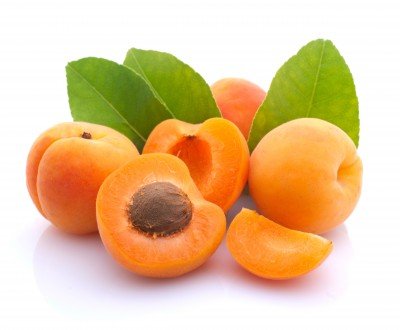
Where can I get apricot kernels?
As long as you don’t live in a country where apricot kernels are repressed, they are fairly easily obtained, as anywhere that grows apricots has kernels. Up until 2016 that included Australia and New Zealand, but our corrupt governments have now done everything they can to prevent this.
Our online business Nature Foods used to sell NZ grown kernels up until 2016. But now, apricot kernels are an underground black market item like cannabis oil, which is also a cancer cure, and is also “illegal” because it poses a threat to the cancer industry.

Dietary Cyanide is therapeutic
Foods containing “dietary cyanides” may well be a valuable therapeutic tool, and the “cyanide” is an essential part of the treatment value
Glycosides are sugar derivatives. An overwhelming number of glycosides occur in nature, mainly in plants. Recently these compounds have received much attention because they possess a variety of biological activities and have found importance in therapeutic, nutritional and clinical use.
Cyanide is not an undesirable side effect. A high cyanogenic glycoside component releases toxic hydrogen cyanide via auto-hydrolysis in the presence of water in the gut.
Some researchers believe this is associated with an additional anti-cancer effect similar to that of the laetrile itself.
Some other commonly consumed plants that contain dietary cyanides include: almonds, tapioca, lima beans, flax seeds, and spinach.
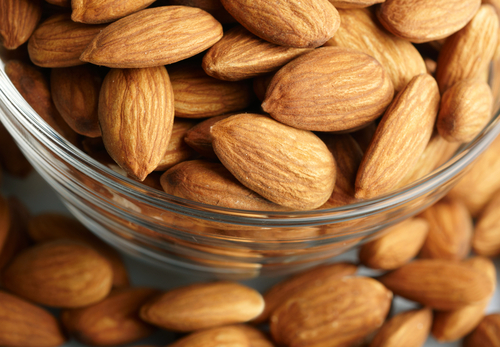
Naturally Occurring Glycosides
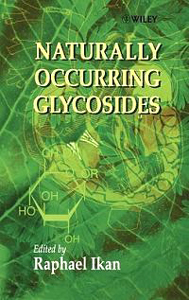
The book “NATURALLY OCCURRING GLYCOSIDES was published in 1999 and it covers the positive uses of Cyanogenic Glycosides.
Naturally Occurring Glycosides summarises significant contemporary information on chemical, nutritional, biological and pharmacological aspects of naturally occurring glycosides. Though mainly found in plants, there are an overwhelming number of glycosides which occur in nature.
Currently at the forefront of scientific investigation, these compounds have a variety of uses including the treatment of congestive heart failure, lowering cholesterol, flavourings, antibiotics and sweeteners.
Naturally Occurring Glycosides presents 12 chapters dealing with chemical structure, occurrence, biosynthetic and biological activity of the following: Aminoglycosidic antibiotics; Anthocyanin glycosides; Cardiac glycosides; Carotenoid glycosides; Cyanogenic glycosides; Glycosinolates; Glycosidic bound volatiles in plants; Limonoid glycosides; Saponins; Steroidal glycoalkaloids; Steroidal oligosaccarides from marine sources; Terpenoid glycoside sweeteners.
By reading Naturally Occurring Glycosides, researchers working in chemistry, biochemistry, biology, toxicology, physiology and pharmacology will gain a fascinating insight into the field of glycosides.
Website – http://www.wiley.ca/cda/product/0,,047198602X,00.html
World Without Cancer

In 1974 G. Edward Griffin wrote WORLD WITHOUT CANCER. This book explores the revolutionary concept that cancer is a deficiency disease, like scurvy or pellagra, aggravated by the lack of an essential food compound in modern man’s diet. That substance is vitamin B17. But in its concentrated and purified form developed specifically for cancer therapy, it is known as Laetrile, the controversial chemical that currently is banned in the United States.
The story presented in this book does not carry the approval of orthodox medicine. The Food and Drug Administration, The American Cancer Society, and The American Medical Association have labeled it fraud and quackery. Yet the evidence is overwhelming that here, at last, is the final answer to the cancer riddle. Why has orthodox medicine waged war against this non-drug approach?
The author contends that the answer is strictly political and is based upon the economic and power goals of those who control the medical establishment. WORLD WITHOUT CANCER blazes the trail into previously unexplored territory and reveals a shocking picture of how science has been subverted to protect entrenched commercial and political interests. It contains the kind of explosive impact that could topple an empire. And perhaps it will.
The book is freely available for download here: https://archive.org/details/World_Without_Cancer
Check out the excellent reviews for this book on Amazon http://www.amazon.com/World-Without-Cancer-Story-Vitamin/dp/0912986190
A documentary by G. Edward Griffin is on Youtube along with a lot of other good info about B17 https://www.youtube.com/watch?v=JGsSEqsGLWM
Iowa State University

Iowa State University on the other hand knows better… I have reprinted their research in full, because it’s a valuable contribution to greater understanding of the subject. It’s certainly hard to argue with their reasoning:
“Amygdalin or laetrile is a cyanide compound found in apricot kernels. It is a phoney, ineffective cancer treatment that is illegal in the U.S. because it is harmful and fraudulent”
This summary was originally copied from the Iowa State University Extension website, but they have since removed the page (possibly fearing that it made them look like idiots)
The Right Dose

It is important to get the right dose. Like many things apricot kernels are dangerous in excess. The generally recommended dose is 1 kernel per 10lbs bodyweight, per day, in split doses, eaten whole.
“The dose makes the poison.” There’s hardly a more important toxic principle than that. You can get a lot of things to show positive for mutagenicity if you’re willing to load up on them.
Beyond that key point, Ames himself has made the argument that synthetic compounds and naturally-occurring ones have the same hit rate in these assays. Plants have evolved a variety of pesticides and antifeedant compounds, many of which are reactive and toxic at some level – therefore, most (as in 99.99%, according to his estimate) of the pesticides in the human diet are those found in the plants themselves. The cruciferous vegetables (broccoli, cabbage, mustard and so on) are particularly rich in compounds that will light up an Ames test. A fine article of his from 1990 states that “. . . it is probably true that almost every plant product in the supermarket contains natural carcinogens.”
The Ames Test And the Real World – http://dlowe.blogspot.com/2002_07_01_dlowe_archive.html
Another bogus example of poisoning
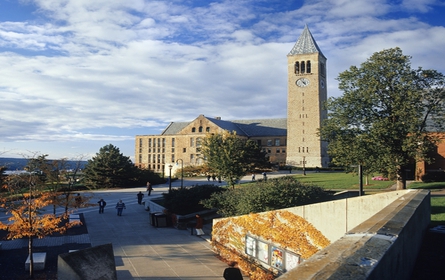
This quote originally came from another American university site – Cornell University New York. They started out discussing examples of cyanogenic glycosides actually killing people. Yet this is the worst example they had. Details were vague – just how much did they eat? Raw cassava root is a potent source. The webpage has since been taken down.
Although the media is frequently reporting that people are having severe toxic reactions to foods containing dietary cyanides, the reoccurring pattern is that they provide no evidence.
Doctors are constantly claiming that apricot kernels are a lethal toxin, yet a typical example of a toxic reaction is an unsubstantiated allegation of a malnourished African eating cassava roots. There are many thousands of people eating cassava roots, but there seems to be a real shortage of dead ones.
“Most events tend to occur at times of drought, hunger or simple inexperience.
Children in Venezuela became poisoned from eating Cassava roots. The 8 children had consumed raw Cassava roots effectively bypassing any of the standard detoxification steps. Some children fell critically ill. Respiratory failure and circulatory collapse were the serious consequences. However, the children did recover when quickly treated”

In complete contrast to the idea that Africans were poisoned by eating cassava, there is a long and documented history of Africans living on cassava diet having no cancer.
“In the British Medical Journal of June 1923, was a letter from a British doctor who had been practicing medicine in Nigeria for 23 years and found no cancer among his patients. Following this letter there were several letters of concurrence from other long serving doctors in Africa. Then in 1931, Albert Schweizer, who had founded his hospital in Gabon in 1913, reported that he had found no cancer among the natives there.Their staple diet was cassava and millet”
“Your Health at Risk” by Dr Toni Jeffreys (1998)
How many people have died from eating apricot kernals?
In the past 10 years, in NZ and Australia combined, there have been 137 adult and 32 child enquiries to poison centres, giving a rough average of 14 adult and 3 child enquiries per year for the whole of Australasia.
Some of these were just general enquiries, and in many instances no symptoms were reported.
There were only two instances where medical intervention was required. Although these people were hospitalised, there was no report of death or long term problems.
The most recent Canadian poisoning incident occurred in May 2009, when a woman was hospitalised following the consumption of approximately 40 apricot kernels in a short period of time.
The FSANZ have only managed to dig up four deaths globally from consumption of apricot Kernels, and these appear to be the only confirmed deaths in the last 57 years. Sayre and Kaymakcalavu (1964) report that between 1957 and 1962, two children died of cyanide poisoning in a hospital in Central Turkey after eating apricot kernels. No information was provided on how many kernels were consumed.
Lasch and Shawa (1981) report two more deaths of children in Gaza. Once again, there was no information on how much was consumed. Compare these comparatively small numbers with the numbers of deaths and illnesses from other causes such as food poisoning from widely purchased foods.
Or compare it with the literally millions of deaths from prescribed pharmaceutical drugs over the same time period. It is clear from the numbers above that we are talking about an extremely minor risk that does not need to be outlawed. It is nowhere near the “unacceptable acute risk to public health and safety for consumers due to HCN poisoning” that the FSANZ are claiming
Laetrile has a specific cancer preventive and controlling effect
Laetrile is an amygdalin, a simple chemical compound consisting of two molecules of sugar, one molecule of benzaldehyde,and one molecule of cyanide. Nitrilosides are known as “laetrile” when used in medical dosage form.
Laetrile is a natural substance made from apricot pits and is claimed by its developers to have a specific cancer preventive and controlling effect. Dr. Ernest Krebs, Sr., who was the first to use laetrile therapeutically in this country, considered laetrile to be an essential vitamin and named it B17.
Laetrile has been legalized in several states in the United States; however, many doctors in the medical community reject its use in human cancer patients on the grounds that it is ineffective and may be poisonous because of its cyanide content. This view is not held by Dr. Dean Burk, chief cytologist of the National Cancer Institute, who has conducted extensive tests including the use of laetrile and states that “Laetrile is remarkably non-toxic … compared with virtually all cancer chemotherapeutic agents currently studied.” (“Laetrile – An Answer to Cancer?” Prevention, December 1971, p. 162.) Other scientists claim that cyanide occurring naturally in food is not dangerous.
Laetrile is manufactured and used legally in over 17 countries throughout the world, including Mexico, Germany, Italy, Belgium, and the Philippines.
Natural cyanide is locked in a sugar molecule. It is normally found in over 2,000 known unrefined foods and grasses. A concentration of about 2 or 3 percent laetrile is found in the whole kernels of most fruits, including apricots, apples, cherries, peaches, plums, and nectarines, and in some 70 plants commonly fed to animals for fodder. A sprouting seed produces from 10 to 30 times as much laetrile as does the mature plant. Few citrus fruits contain laetrile. Shelled and unshelled apricot kernels contain 2 to 3 percent amygdalin and are also excellent sources of protein, unsaturated fatty acids, and minerals.
According to its advocates, laetrile is a highly selective substance that attacks only the cancerous cells. When laetrile is eaten and absorbed by normal cells, an enzyme called rhodanese detoxifies the cyanide, which is then excreted through the urine. But because cancer cells are completely deficient in rhodanese and are instead surrounded by another enzyme, beta-glucosidase, which releases the bound cyanide from the laetrile at the site of malignancy, laetrile is believed to attack only the malignant areas.
Absorption and Storage
Oral doses of laetrile are not affected by the action of the acid medium of the stomach but pass directly into the intestine, where the substance is acted upon by bacterial enzymes. The bacterial enzymes in the intestine decompose the amygdalin into four components, which are then absorbed into the lymph and portal systems and circulated throughout the body.
A Loyola University biologist has conducted laboratory tests on mice indicating that laetrile in conjunction with various vitamins and enzymes is more effective in causing a remission of cancer than laetrile administered alone. (Los Angeles Times, Sept. 7, 1977.)
Dosage and Toxicity
Although much research on laetrile is still needed, the usual dosage is 0.25 to 1.0 gram taken with meals. Cumulative amounts of more than 3.0 grams are sometimes taken, but more than 1.0 gram is never taken at any one time. Dosages as high as 20 grams daily of combined oral and intravenous administration have been used on patients whose detoxification and elimination levels of laetrile were adequate.
Five to thirty apricot kernels eaten through the day may be a sufficient preventive amount, but they should never be taken all at one time. It is not considered desirable to prepare a slurry of ground up kernels (as in a solution of water, milk, or orange juice) and then let it stand for long periods of time before consumption.
Toxicity levels have not been established, and one should exercise extreme caution in order to avoid ingesting excessive amounts all at one time.
Deficiency Effects and Symptoms
Prolonged deficiency may lead to diminished resistance to malignancies.
Beneficial Effect on Ailments
Amygdalin may reduce the size of cancer tumors, ease accompanying pain, and inhibit the growth of cancer cells. In addition, it favorably regulates blood pressure and may have an anti-rheumatic and esthesizing effect.
Cancer cells were dying like flies

In his UK Observer article entitled Quacks on the Rack, John Diamond (a strongly anti “alternative” treatment English journalist who died of cancer) summarily dismissed what is arguably the most famous of the natural and proven anti-cancer treatments known to man, the natural extract of the apricot kernel, otherwise known as Vitamin B17.
“Supporters of Laetrile (vitamin B17) and Essiac, in particular, made so much noise about their miracle cures that both have been through the research mill on numerous occasions and found to be useless.”
Interestingly, Dr. Dean Burk, the former head of the Cytochemistry Department of the National Cancer Institute, and one of the co-founders of this famous American medical institution, had worked on Vitamin B17 personally. He described this substance in very different terms: “When we add laetrile to a cancer culture under the microscope,” said Burk, “providing the enzyme glucosidase also is present, we can see the cancer cells dying off like flies.” (glucosidase being the enzyme heavily present in cancerous cells which triggers the unique cancer-destroying mechanism found in Vitamin B17.
An excellent clinical analysis of this mechanism is found in ‘B17 Metabolic Therapy – In The Prevention And Control Of Cancer – a concise history of the research into this vitamin, including many clinical assessments. Dr Burk also stated that evidence for Laetrile’s efficacy had been noted in at least five independent institutions in three widely separated countries of the world.
So who do we trust in this matter? Diamond or Burk? Now we can ask ourselves whether it was perhaps the fault of some kindly but misguided soul who posted John Diamond an essay on the benefits of Vitamin B17 mixed with walnut water that caused him to dismiss B17 so emphatically. Or it could be that John actually trusted the conventional research reports he had accrued on this vitamin. By examining the sources from where John Diamond might have got his B17 research ‘information’, the ugly features of conventional cancer research move more sharply into focus.

Because of the money
Cancer is big business and knowledge claims on any treatments that earn money and, conversely, on any treatments that do not earn money for the drug companies, are never neutral. Dr Ralph Moss served as the Assistant Director of Public Affairs at America’s most famous cancer research institution, Memorial Sloan Kettering, in Manhattan. He knows the cancer industry inside out. Hear what he has to say and judge for yourself the quality of the evidence against the effectiveness of Vitamin B17: Moss: “Shortly after I went to work [at the Sloan Kettering Cancer Institute], I visited the elderly Japanese scientist, Kanematsu Sugiura, who astonished me when he told me he was working on Laetrile (B17)”
At the time it was the most controversial thing in cancer, reputed to be a cure for cancer. “We in Public Affairs were giving out statements that laetrile was worthless, it was quackery, and that people should not abandon proven therapies. I was astonished that our most distinguished scientist would be bothering with something like this, and I said, Why are you doing this if it doesn’t work? – He took down his lab books and showed me that in fact Laetrile was dramatically effective in stopping the spread of cancer. We were finding this and yet we in Public Affairs were told to issue statements to the exact opposite of what we were finding scientifically.”
Unable to sit on this information, Moss later called a press conference of his own and, before a battery of reporters and cameramen, charged that Sloan-Kettering officials had engineered a massive cover-up. He provided all the supporting documents and named all the names necessary to validate his case. The following day he was fired for ‘failing to carry out his most basic job responsibilities’.
Similarly, in his book ‘World Without Cancer’, cancer industry researcher Edward Griffin noted : “Every Laetrile study had been tarnished with the same kind of scientific ineptitude, bias and outright deception… Some of these studies openly admitted evidence of anti-cancer effect but hastened to attribute this effect to other causes. Some were toxicity studies only, which means that they weren’t trying to see if Laetrile was effective, but merely to determine how much of it was required to kill the patient.” The ‘evidence’ supporting John Diamond’s claim that Vitamin B17 is useless and even dangerous is available in abundance in all of the major cancer institutions today. Well of course it is! We’re in the merchant’s house, don’t forget.
As Pat Rattigan, author of ‘The Cancer Business’ reports: “The threat to the cancer business from effective therapies was taken very seriously from the beginning. By the 1940’s the Syndicate had 300,000 names on its ‘quack’ files. Vitamin B17, being a unique threat due to its simplicity, attracted more concentrated attacks than all the other treatments put together: fraudulent test reports; hired, banner-carrying pickets outside clinics; rigged juries; newspaper character assassinations; dismissal of heretic employees, etc. The FDA, orchestrating the onslaught, sent out 10,000 posters and hundreds of thousands of leaflets warning about the dangers of the toxicity of the non-toxic substance. Earlier, a Congressional Accounting Office had found that 350 FDA employees had shares in, or had refused to declare an interest in, the pharmaceutical industry.”
The American Food and Drug Administration issued one such story about the death of an eleven month old girl, supposedly from cyanide poisoning due to her apparently swallowing her father’s Vitamin B17 tablets. Cancer specialist and B17 advocate Dr Harold Manner takes up the story: ‘…I was lecturing in Buffalo, New York and…after I had made some strong statements – a man stood up and said “Dr. Manner, how in the world can you make statements like that when the FDA is making these other statements?” I reiterated that the FDA statements were lies. ‘He said, “Look at this little girl in upstate New York, she took her father’s Laetrile tablets and died of cyanide poisoning.” Just then a little lady stood up: “Dr. Manner let me answer that question. I think I am entitled to because I am that little baby’s mother. That baby never touched her father’s Laetrile tablets. The doctor, knowing the father was on Laetrile, marked down “possible cyanide poisoning”. At the hospital they used a cyanide antidote and it was the antidote that killed the child. And yet that statement will continue to appear even though they know it is a lie.”
The scare stories always focus on the minute amounts of naturally occurring cyanide found in VitaminB17. But no mention is made in any of these stories of the wondrous mechanism governing the release of this cyanide. No harm is done to the person eating this vitamin (if that were the case, we have consumed enough apricots, apples, peaches and cherries etc containing B17 to have finished us off long ago.) The cyanide is released only when cancerous cells are recognised by their high glucosidase content. B17 cyanide attacks cancer cells specifically. No large amounts of glucosidase detected means no cyanide release. Rest assured, there is no evidence that vitamin B17 can kill, unless of course, one is accidentally crushed under a pallet of the stuff!
A further embarrassment for the cancer orthodoxy must surely be the research being carried out at the Imperial College in London, where researchers are looking at ways of using naturally-occurring plant cyanide to specifically attack human bowel tumours. The idea came about after studying the pattern of specific cyanide release in the almond and cassava fruit which protects them from insect attack. Another one of those natural wonders just crying out to be heard is at last being listened to by the orthodoxy perhaps? Very sadly, in assessing the deservedness of the ‘shady’ reputation bestowed upon Vitamin B17 metabolic therapy, we realise it is entirely unwarranted and that instead, there has been a sustained attack by the conventional cancer industry on this treatment, an attack that has carried on in one form or another for the last forty years.
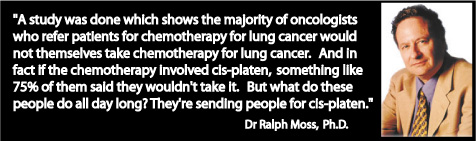
As mentioned earlier, with global spending on conventional cancer running into the hundreds of billions annually, a naturally-occurring cancer cure of any description is an unwanted intruder. Dr Moss again, on the money involved in conventional cancer: Moss: “About 630,000 people die every year of cancer in the US, and it really is an epidemic disease. We have got a tremendous industry. Every one of those people who is getting cancer and dying of it is going to be treated, and these treatments are extremely expensive. Chemo is tens of thousands, sometimes hundreds of thousands of dollars. A bone marrow transplant, which is basically another way of giving chemotherapy, or radiation, can run to about $150,000 per person, and is almost never effective. It kills about 25% of the patients.” Lee: “Why carry on doing it?” Moss: “Because of the money, which is tremendous.” When we understand the amounts of money involved, we can begin to understand the in-house desire to sustain a ‘fact-creating’ process in support of conventional treatment. Conventional cancer treatment and research is a licence to print money.

Most definitely, conventional interested parties and institutions have colluded in a shameful anti-Vitamin B17 ‘fact-creating’ process, which in turn has surely led to the early and even unnecessary deaths of thousands upon thousands of people. As for John Diamond’s dismissal of Vitamin B17, he didn’t write his comments on B17 as an intentional slur. He wasn’t the forked tongue in this chain of events. He desperately wanted to live. His single paragraph read by thousands was just another example of the damaging knock-on effect of merchant-speak. Merchant-speak on Vitamin B17 metabolic therapy has exacted a grave injustice upon this treatment and subsequently, upon all who have been persuaded to think likewise. It is interesting to note that there are cultures today who remain almost entirely cancer-free.
The Abkhasians, the Azerbaijanis, the Hunzas, the Eskimaux and the Karakorum all live on foodstuffs rich in nitriloside or vitamin B17. Their food consists variously of buckwheat, peas, broad beans, lucerne, turnips, lettuce, sprouting pulse or gram, apricots with their seeds and berries of various kinds. Their diet can provide them with as much as 250-3,000mg of nitriloside a day.
The founding father of Vitamin B17 research, Ernst T Krebs Jr., studied the dietary habits of these tribes. Krebs stated: “Upon investigating the diet of these people, we found that the seed of the apricot was prized as a delicacy and that every part of the apricot was utilized.” The average western diet with its refined, fibreless foods offers less than 2mg of nitriloside a day. It has also been noted that natives from these tribes, who move into ‘civilised’ areas and change their diets accordingly, are prone to cancers at the regular western incidence. An important point to note with B17 content in the apricot fruit is that the more bitter the taste of the apricot kernal, the richer is the content of B17. If the kernel does not taste bitter, the B17 content will be quite low.

L I N K S
http://www.whale.to/m/binzel.html – ALIVE AND WELL – One Doctor’s Experience with Nutrition in the Treatment of Cancer Patients – a book by Philip E. Binzel, Jr., M.D.
http://www.amazon.com/World-Without-Cancer-Story-Vitamin/dp/0912986190 – World Without Cancer book on Amazon (includes many excellent reviews for this book)
https://archive.org/details/World_Without_Cancer – Free download of World Without Cancer ebook
http://www.healingdaily.com/detoxification-diet/vitamin-b-17-laetrile.htm – Excellent summary of B17
http://articles.mercola.com/sites/articles/archive/2013/08/03/natural-cancer-treatment.aspx – Why Medicine Won’t Allow Cancer to Be Cured
http://www.naturalnews.com/027088_cancer_laetrile_cure.html – Apricot Seeds Kill Cancer Cells without Side Effects
http://www.naturalnews.com/044850_Laetrile_cancer_hospital_cover-up.html – Laetrile cover-up exposed at major cancer hospital
http://pipeline.corante.com/– Blog about drugs and the pharma industry
http://www.theforbiddenknowledge.com/hardtruth/cancer_business.htm – The Cancer Business
http://together.net/~cauldron/vitamin%20B17.html – article by Ernest Krebs
http://users.navi.net/~rsc/nitrilo1.htm – The Nitrolosides in plants and animals
http://www.vitaminb17.org/ – Summary of “World Without Cancer – the B17 story”
http://www.whale.to/a/ransom.html – Death by Doctoring
http://worldwithoutcancer.org.uk/studies-research-more-documented-evidence/amygdalin-laetrile-b-17/ – documented research on B17 therapy
https://www.youtube.com/watch?v=AF84nu9wEvc – Burzynski – Cancer Big Business
https://www.youtube.com/watch?v=JGsSEqsGLWM – About B17 – a documentary by G. Edward Griffin on Youtube
www.frot.co.nz

